The Dream Final Scenario
It is the match that the entire world has been waiting for—a final showdown between the two greatest players to ever grace a football pitch. For nearly two decades, Lionel Messi and Cristiano Ronaldo have traded Ballon d’Or trophies, broken every goalscoring record imaginable, and divided the planet into two passionate camps. But as the 2026 World Cup approaches, FIFA has dropped a massive update that changes everything for fans hoping to see these titans clash one last time.
The headline news is bittersweet but ultimately hopeful: Messi and Ronaldo will not face each other in the group stages of the 2026 World Cup.
While some fans might have hoped for an early blockbuster to kick off the tournament in the United States, Mexico, and Canada, FIFA’s latest seeding rules have effectively “banned” this possibility. But don’t despair—this separation might actually be the best thing for football. By keeping them apart early, the football gods (and FIFA’s algorithms) are setting the stage for something far more dramatic: a potential meeting in the knockout rounds, or perhaps, the greatest World Cup Final in history.
The Science Behind the Separation
The reason for this forced separation isn’t a conspiracy; it’s a matter of cold, hard rankings. For the 2026 tournament, FIFA has stuck to its tradition of creating “Pots” based on world rankings to ensure fair play.
Pot 1, the group of top seeds, is reserved for the host nations and the highest-ranked teams in the world. With the USA, Mexico, and Canada automatically taking three spots, the remaining nine spots go to the elite of the elite. Thanks to Argentina’s status as reigning World Champions and Portugal’s consistent high ranking, both nations have secured their places in Pot 1.
Why does this matter? The rules of the draw are simple: no two teams from the same Pot can be drawn into the same group. This safeguards the tournament from having a “Group of Death” that eliminates a favorite too early. It guarantees that heavyweights like Argentina, France, Spain, Brazil, and Portugal are spread out across the 12 different groups.
For fans, this means you won’t see an Argentina vs. Portugal thriller in the opening weeks. But it also means that both Messi and Ronaldo have a much smoother path to the Round of 32. By avoiding other giants early on, their chances of surviving deep into the tournament—and eventually finding each other—skyrocket.
A New ‘Tennis-Style’ Path to Glory
If the Pot 1 rule wasn’t enough, FIFA has introduced a fascinating new wrinkle for 2026 that mimics the world of professional tennis. In a move designed to protect the very best teams, the organizers have implemented a seeding system similar to Grand Slam tennis tournaments like Wimbledon or the US Open.
Under this new “tennis-style” system, the top four ranked teams—currently projected to be Spain, Argentina, France, and England—are placed in separate quadrants of the bracket. The logic is straightforward: if these top seeds win their respective groups, they are mathematically guaranteed not to meet until the semi-finals or the final.
For Lionel Messi and Argentina, this is a massive advantage. It clears their path of the other top-three ranked rivals until the bitter end. For Cristiano Ronaldo and Portugal, the situation is slightly more complex. While they are in Pot 1, they likely won’t be in that protected top-four tier. This makes their route more dangerous, but it also creates a tantalizing possibility: if the bracket breaks just right, Portugal could be the “wildcard” giant that crashes the party on Argentina’s side of the draw—or meets them in a cinematic final at MetLife Stadium.
Ronaldo’s Rollercoaster & The Red Card Scare
While the draw mechanics are fascinating, the real drama leading up to 2026 has been about whether the stars would even make it to the pitch. For Cristiano Ronaldo, the road to his record-breaking sixth World Cup recently hit a terrifying speed bump.
Just weeks ago, the Portuguese icon faced the genuine threat of missing the start of the tournament. Following a red card incident in a qualifier against Ireland—where the veteran forward was dismissed for an elbow—fears mounted that a standard three-match ban would rule him out of the World Cup opener.
However, in a twist of fate fit for a movie script, FIFA’s disciplinary committee handed Ronaldo a lifeline. In a decision that made waves across the football world, they suspended the majority of his ban, placing him on a “probationary period” instead.
This ruling is huge. It means Cristiano Ronaldo is officially cleared to play from Matchday 1.
The decision has breathed new life into the Portugal camp. At 40 years old, Ronaldo knows this is his final crusade. He isn’t just playing for a trophy; he is playing to rewrite history one last time. The reprieve from FIFA ensures that if Portugal makes a run, their captain will be leading the charge from the very first whistle.
One Last Shot at Immortality
We must take a moment to appreciate the sheer gravity of what is coming in 2026. In the history of sports, rarely do we get a “Last Dance” that involves two active legends of this caliber.
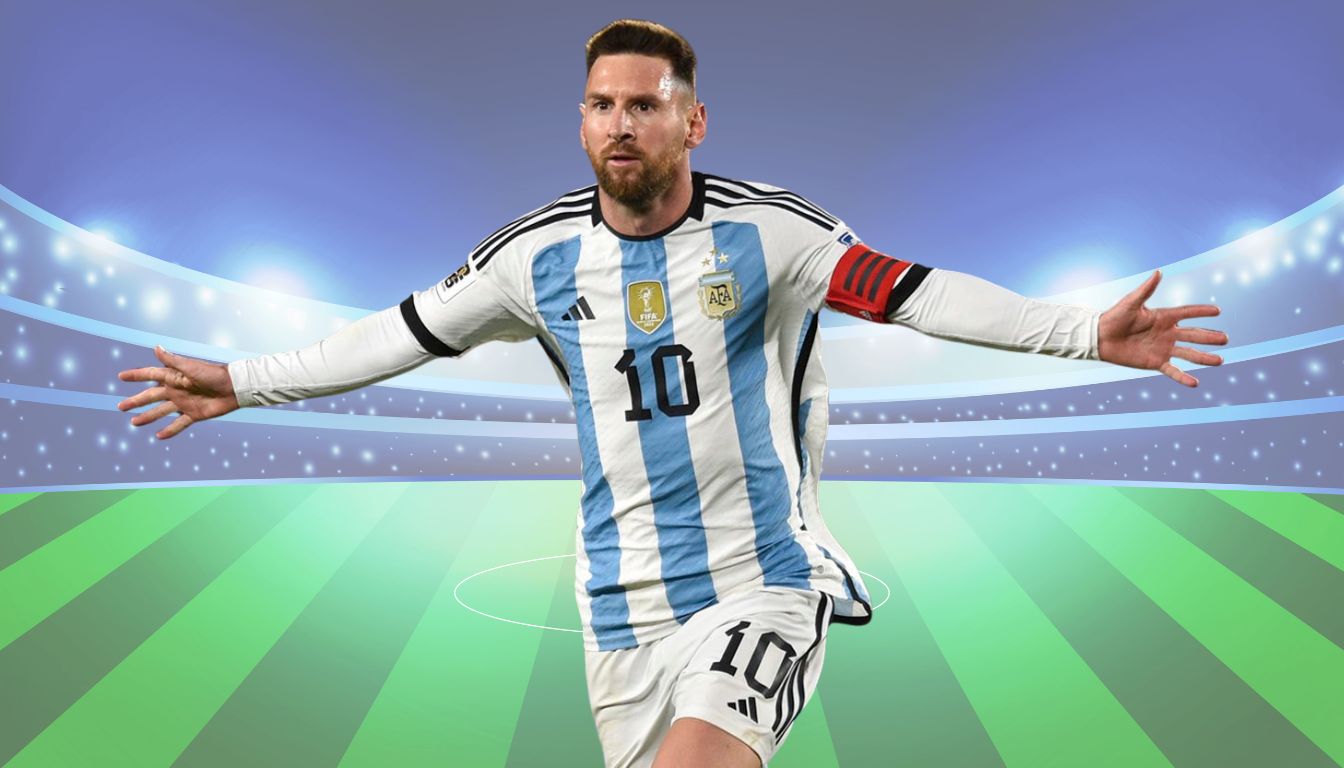
On one side, you have Lionel Messi. He will be turning 39 during the tournament. He has already completed football, lifting the World Cup in Qatar and achieving god-like status in Argentina. Yet, the competitive fire still burns. Messi has hinted that playing in the US—his new home with Inter Miami—would be “extraordinary.” He is no longer the lightning-quick dribbler of 2010, but he has evolved into a cerebral playmaker, a quarterback in boots who can dismantle a defense with a single pass.
On the other side stands Cristiano Ronaldo. He will be 41. Critics have written him off a dozen times, and a dozen times he has silenced them. He remains a physical marvel, a goal-scoring machine who refuses to accept the dying of the light. For Ronaldo, the 2026 World Cup is the one jewel missing from his crown. He watched his rival lift the trophy in 2022; you can bet everything you own that the image has haunted and motivated him every day since.
The narrative is perfect. The stage North America—is massive. The stakes are history itself.
Summary:
The World Waits So, while the headline is that they won’t meet in the group stage, the real story is that the stage is being set for a much grander collision. FIFA’s seeding rules have ensured that Messi and Ronaldo cannot knock each other out early. They have been given separate lanes to race in, with the hope that those lanes merge at the finish line.
It is a long shot. Both teams need to navigate a grueling tournament, avoid upsets, and defeat the world’s best young talent. But as long as Argentina and Portugal remain in the bracket, the dream of a Messi vs. Ronaldo World Cup Final remains the most intoxicating storyline in sports.

My name is Raushan Kumar Jha i am a professional blogger, content strategist, and SEO expert. I write about famous personalities, health, fitness, and finance on WorldsLegends.com. With six years of experience and a commerce background, crafts engaging, well-researched content that ranks higher and captivates audiences.